The Rich History Behind the Caribbean Food Centennial
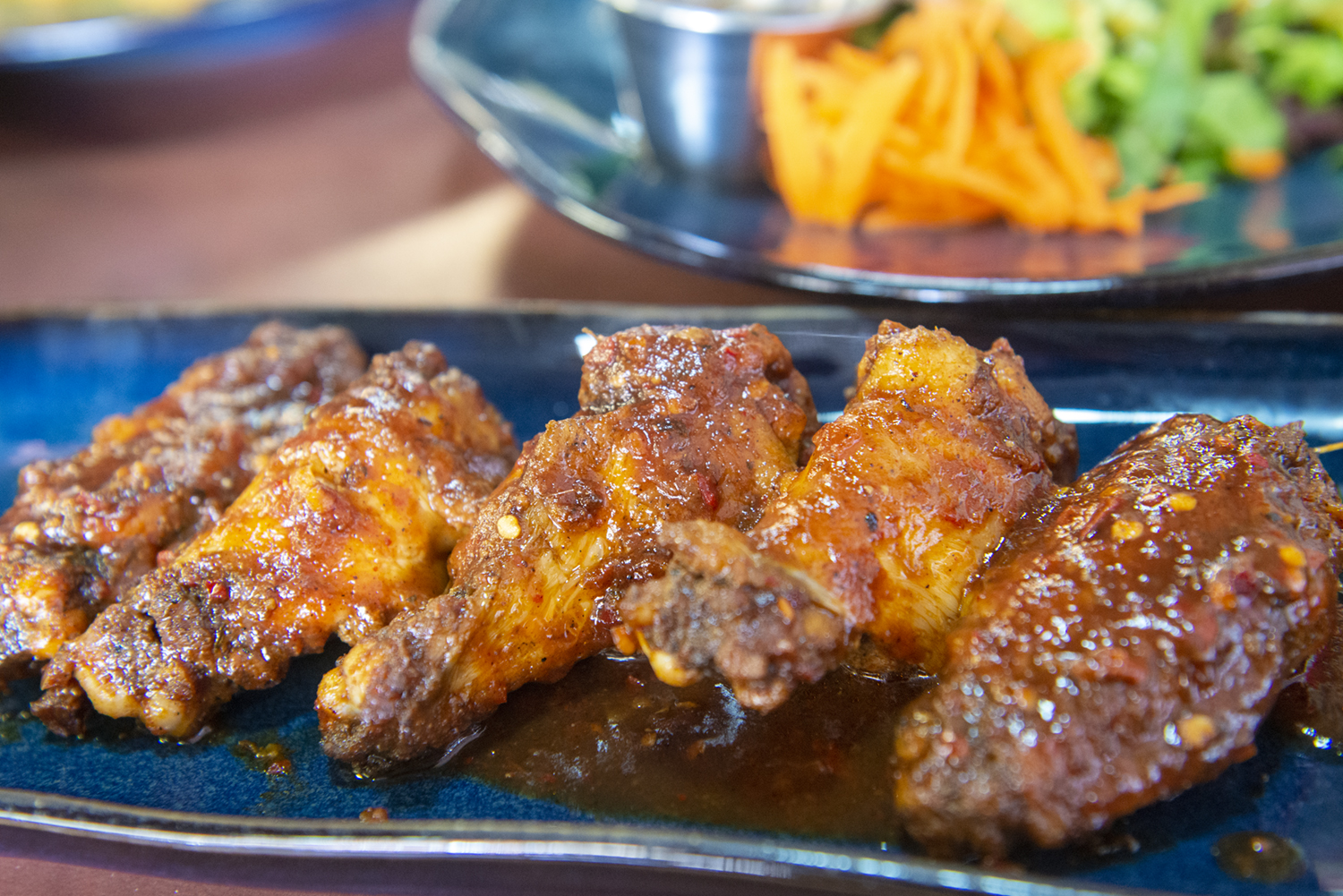
The phrase caribbean food centennial sounds festive on its face, but it carries more weight than a banner at a street fair or a themed restaurant week. A centennial, by definition, asks people to look across a hundred years. In the Caribbean, that kind of reflection quickly becomes larger than food alone. It leads to plantations and provision grounds, to migration and market women, to the rise of tourism, to wartime shortages, to church halls in Brooklyn and Toronto, and to the quiet endurance of recipes carried in memory rather than in notebooks.
When people speak about a Caribbean food centennial, they are often celebrating more than a single event. In practice, the idea tends to gather several strands at once: a century of culinary documentation, a hundred years of modern nation-building in the region, and generations of cooks who turned limited ingredients into meals with unmistakable character. The result is not one neat story. It is a layered one, shaped by Indigenous knowledge, African technique, European colonial trade, Indian indenture, Chinese migration, Levantine commerce, and the practical intelligence of island households that learned to adapt to weather, cost, and seasonal supply.
That complexity is what gives Caribbean food its depth. It is also what makes any centennial worth studying rather than merely attending.
A century is a useful lens, even when the food is much older
Caribbean cooking did not begin a hundred years ago. Cassava, peppers, maize, sweet potato, and techniques for smoking and preserving food were in use long before European arrival. African culinary knowledge profoundly reshaped what and how people ate across the region. Later came salted cod, rice, cane sugar, citrus, and imported flour, each tied to empire and commerce. By the late nineteenth and early twentieth centuries, many dishes now treated as timeless staples had already taken recognizable form.
So why does the centennial frame matter?
Because the last hundred years transformed the way Caribbean food was recorded, sold, promoted, and shared. Around the early decades of the twentieth century, urban markets became more systematized, shipping networks expanded, tourism campaigns began to market local dishes as part of the island experience, and home economics programs started to write down recipes that had long circulated orally. Governments, newspapers, women’s groups, church communities, and later diasporic associations all played a role in defining what counted as “national” food.
That process was never neutral. Every act of documentation leaves something out. Recipes from elite homes were more likely to be published than dishes associated with rural cooks or informal vendors. Ingredients that looked attractive to visitors often received more attention than the sturdy daily foods that actually fed working families. A proper look at the history behind the caribbean food centennial means noticing both what was celebrated and what was overlooked.
Before there was branding, there was survival
Anyone who has spent time in Caribbean kitchens, especially older ones in rural districts or working-class urban neighborhoods, recognizes a hard truth behind the region’s most beloved dishes. Many of them were born from necessity.
Pepperpot in Guyana, callaloo in Trinidad and Tobago and elsewhere, rundown in Jamaica, souse in Barbados, oil down in Grenada, fungee and pepperpot in Antigua and Barbuda, mannish water, cou-cou, pelau, cook-up rice, and countless soups and stews all share a common logic. They make economical use of starch, greens, scraps, salted proteins, coconut, legumes, and whatever is fresh that day. They reward patience more than luxury. caribbean food centennial They rely on seasoning, heat control, and timing rather than expensive cuts.
This is one of the most important tensions in Caribbean food history. Dishes that are now presented on tasting menus and cruise brochures often emerged from hardship. Saltfish became foundational because caribbean food centennial salted cod traveled well and could feed laboring populations at low cost. One-pot meals flourished because they stretched ingredients and fuel. Breadfruit, once introduced for plantation logic, was absorbed into everyday cooking and transformed into something far more local than its colonial origins would suggest.
By the early twentieth century, this culinary pragmatism was still central. Many islands were dealing with uneven wages, export dependency, natural disasters, and restricted access to land. Food traditions continued not because they were quaint, but because they worked. They were filling, adaptable, and socially meaningful. A centennial celebration that skips over that truth turns history into decoration.
The market women were as important as the chefs
Modern food culture often places the chef at the center. The Caribbean record demands a wider lens. Long before celebrity kitchens and televised competitions, the region’s food authority sat in markets, on roadside stalls, at fishing beaches, and in homes where women managed supply under pressure.
Across the twentieth century, market women did far more than sell produce. They stabilized local food economies. They knew when christophene was abundant, which yam traveled best, how weather affected fish prices, and who needed credit until payday. In many islands, they also preserved regional taste. They kept particular varieties of herbs, roots, and peppers in circulation long after imported goods and supermarket habits threatened to flatten local eating.
This matters when tracing the rich history behind the Caribbean food centennial because much of that history was never formally archived. It was embodied. A vendor’s judgment about a ripe mango, a grandmother’s instinct for when coconut milk had reduced enough, or a fish seller’s advice on what to cook after a storm, these were practical forms of expertise. They do not always appear in state records, but they shaped the cuisine every day.
I have seen this firsthand in Caribbean communities where a market stall carries more culinary memory than an entire glossy cookbook. Ask about a dish and you often get an answer in stories rather than measurements. “Use a little more thyme if the chicken is old.” “Do not let the okra sit too long before slicing.” “That pumpkin is sweeter than the pale one.” These are not romantic details. They are the mechanics of tradition.
Nationhood changed the menu, or at least the language around it
The middle decades of the twentieth century were decisive. As Caribbean societies pushed toward independence and stronger national identity, food became a public symbol. A dish could stand in for a people, a landscape, or a political future.
Jamaica’s ackee and saltfish, Trinidad’s doubles and callaloo, Barbados’s flying fish and cou-cou, the Bahamas’ conch dishes, Guyana’s pepperpot and cook-up rice, Haiti’s soup joumou, Puerto Rico’s mofongo, the Dominican Republic’s sancocho, Cuba’s congrí and ropa vieja, each came to mean more than a meal. These foods helped nations tell stories about themselves. Some represented resilience. Some represented mixture. Some signaled pride in ingredients once dismissed as ordinary.
Yet this process was selective. What gets named “national” is often what can be widely recognized, marketed, and narrated. Plenty of local dishes remained local. Some foods identified strongly with one ethnic community did not immediately receive broad national embrace. Others moved in the opposite direction, crossing ethnic and class boundaries until they seemed to belong everywhere.
That gives the caribbean food centennial real interpretive value. It allows us to ask not just what people ate, but which foods became symbols, who promoted them, and whose labor made that symbolism possible.
Migration carried the pantry abroad
If the first half of the twentieth century shaped Caribbean food at home, the second half changed where that food lived. Migration carried island cooking to London, New York, Miami, Toronto, Amsterdam, and beyond. Once abroad, recipes shifted in response to climate, ingredient availability, and customer expectations.
This is where the history becomes especially vivid. Saltfish remained, but fresh island produce might be replaced with what was available in immigrant neighborhoods. Scotch bonnet might be rationed. Green bananas could be difficult to find at first. Goat became easier to source in some cities than in others. Coconut milk moved from fresh grating to canned convenience. At the same time, diaspora kitchens preserved dishes that younger island families, under the pressure of modern schedules and imported processed food, sometimes cooked less often.
The church fundraiser, the basement party, the community picnic, and the carnival food stall became critical institutions. They raised money, yes, but they also acted as informal archives. A second-generation child who might not know the full history of indenture in Trinidad or Maroon resistance in Jamaica could still learn something essential through roti skin being rolled, curry being “burnt” correctly, or sorrel being steeped at Christmas.
Some of the strongest centennial observances related to Caribbean food have emerged from this diaspora setting. A hundred years is easier to feel when grandparents, parents, and children are standing in the same room eating the same dish with small but telling differences. One generation insists on lard or fresh coconut. Another uses vegetable oil and a food processor. A third learns through YouTube and then phones an aunt to ask why the flavor still seems off. That is history in motion.
Cookbooks, newspapers, and radio gave the cuisine a public voice
One underappreciated part of the past century is the role of media. Cookbooks, newspaper columns, women’s pages, radio shows, and later television quietly standardized and circulated Caribbean recipes. Not perfectly, and not without bias, but decisively.
Early community cookbooks often blended local dishes with British colonial household habits. You might find a steamed pudding near a fish broth, or a pastry recipe next to a guide for preserving guava cheese. That juxtaposition tells its own story. It reveals a region negotiating inherited colonial taste while insisting on its own ingredients and methods.
By the postwar years, more explicitly Caribbean culinary voices began to emerge. Newspapers featured local food more confidently. Tourist boards promoted island specialties. Hotels adapted folk dishes for formal dining rooms. This helped preserve certain foods, but it also sometimes softened them. Spice levels might be moderated. Presentation became more European. Names were adjusted for foreign ears.
That trade-off still exists. A centennial celebration can either flatten the food into a marketable stereotype or use the occasion to explain why the original context matters. The better examples do the latter. They do not merely serve cassava pone or black cake. They talk about labor, trade, migration, and the festive calendars that gave those foods meaning.
Tourism helped and distorted the story
No honest account of Caribbean food over the last hundred years can avoid tourism. The industry put many local dishes on international maps. It created demand for chefs, caterers, fishers, bakers, and farmers. It encouraged hotels and restaurants to frame local cuisine as a point of pride rather than a sign of rusticity.
But tourism also filtered Caribbean food through expectation. Visitors often wanted the sun, the beach, the “spicy” meal, the rum punch, the neatly staged authenticity. That can reward a narrow slice of the cuisine while pushing aside the less photogenic but more historically important foods that people actually eat most often. Rice and peas become shorthand for an entire nation. Jerk turns into a universal label for any grilled meat. “Island style” becomes a vague mood rather than a specific technique.
The centennial lens is useful here because it slows the eye. It reminds us that the region’s food is not a fixed menu for outside consumption. It is a living archive shaped by class, ethnicity, religion, and trade. Sunday lunch in a family home tells one story. A hotel buffet tells another. A vendor outside a cricket ground tells a third.
Certain ingredients tell the whole history in miniature
If you want to understand a hundred years of Caribbean food, it helps to track a few ingredients across time. They reveal how power, taste, and adaptation interact.
Cassava carries Indigenous continuity and practical resilience. Saltfish speaks to Atlantic trade, labor systems, and culinary ingenuity. Rice reflects Asian migration as well as colonial commerce. Coconut points to abundance, preservation, and the move from fresh processing to packaged convenience. Hot peppers show how deeply flavor and identity are linked in the region.
Those ingredients also expose regional variation. A pepperpot in Guyana does not mean the same thing as pepperpot elsewhere. Callaloo changes from island to island, sometimes defined by leafy greens, sometimes by okra, coconut milk, crab, or a blend of all three. Curry in Trinidad, Jamaica, or Guyana reveals different migration histories and seasoning habits. The Caribbean is not interchangeable, and centennial storytelling should resist that temptation.
The home kitchen remains the truest archive
Professional kitchens matter. Food festivals matter. Museums and official commemorations matter. Still, the deepest continuity in Caribbean cuisine lives in ordinary domestic spaces.
It lives in habits that look small until you realize how much they carry. The soaking of peas the night before. The saving of old oil for a certain savory depth. The refusal to rush a stew. The separate seasoning bowl. The Christmas cake fed with rum over weeks, not hours. The Saturday soup that gathers leftovers and memory at the same time.
One reason a caribbean food centennial resonates with so many people is that Caribbean food is unusually tied to family chronology. People date life by dishes. This was the bread your mother baked during shortages. That was the fish broth your grandfather wanted when he came back from sea. This was the table set after Nine Nights, after christenings, after Sunday service, after Carnival, after a funeral. Taste becomes a timekeeping device.
In my experience, the strongest writing and speaking about Caribbean food always includes this domestic scale. Public history can tell you when migration surged or when tourism expanded. A household can tell you when corned beef replaced fresh meat in a hard season, or when imported turkey tails became common, or when an old pudding technique disappeared because no one had the time to grate by hand anymore. Those details are not minor. They are the actual record of change.
What a centennial celebration should do well
A meaningful centennial does more than repeat famous dish names. It should balance pride with honesty. It should acknowledge that some beloved foods emerged from exploitation, scarcity, and colonial trade while also honoring the genius of the people who transformed those conditions into culture.
The strongest commemorations usually do a few things at once.
They connect recipes to history rather than treating food as isolated entertainment.
They make room for regional and ethnic variation instead of pretending there is one single Caribbean table.
They value home cooks, vendors, and elders alongside trained chefs.
They discuss present pressures such as climate change, import dependence, and the loss of agricultural biodiversity.
They allow younger generations to taste, ask questions, and inherit practice rather than slogans.
That final point matters more than it may seem. Food heritage disappears quietly. A pepper variety is no longer planted. A bread oven falls out of use. A grandmother dies without writing down the proportions she knew by sight. A child grows up loving the meal but never learning the method. Once broken, these chains are hard to repair.
Why the next hundred years will depend on more than nostalgia
Looking backward has value only if it sharpens judgment now. Caribbean food faces serious modern pressures. Climate shifts threaten fisheries, root crops, and coastal agriculture. Imported processed foods continue to compete with local staples. Land use changes reduce access to traditional ingredients. Hospitality industries can either support local supply chains or weaken them, depending on how they buy and what they promote.
Yet there is also reason for confidence. Across the region and the diaspora, cooks are reviving heritage crops, researching old methods, and documenting family recipes with fresh urgency. Younger chefs are treating breadfruit, cassava, sorrel, tamarind, pigeon peas, and local seafood with both respect and technical curiosity. Writers and historians are paying closer attention to women’s labor, migration, and the Afro-Caribbean and Indo-Caribbean roots of dishes too often described in vague terms.
That is why the rich history behind the Caribbean Food Centennial deserves more than ceremonial praise. It offers a way to think seriously about continuity. The last hundred years show how Caribbean people preserved identity under pressure, improvised with intelligence, and turned mixed inheritances into cuisine with a clear voice. The next hundred will require the same qualities.
A centennial, at its best, is not a museum label. It is a handoff. One generation says, this is what we kept alive. The next decides whether it will merely consume that inheritance or learn how to season, plant, preserve, and pass it on. In Caribbean food, that choice is never abstract. You can taste it.
Reggae Pot Jamaican Grill
Address: 7562 S University Blvd Unit C, Centennial, CO 80122
Phone: (303) 997-5623
FAQ About caribbean food centennial
What Jamaican dishes can I try in Centennial?
Reggae Pot Jamaican Grill serves Jamaican specialties such as jerk chicken, stewed oxtail, curry goat, and ackee and saltfish. Check the current menu for availability.
What is ackee and saltfish?
It is Jamaica’s national dish. The restaurant prepares ackee with salted cod, onions, thyme, tomatoes, garlic, black pepper, and pimento.
Can I order Jamaican food for pickup in Centennial?
Yes. Choose the Centennial location at 7562 S University Blvd Unit C when placing a takeout order.
Ends · ISRAELYZSE309